
As Climbing gets more popular it is important that we are taking the precautions to preserve the community and land that we so deeply love. This industry is full of constant information; standards and best practices are always evolving to become safer and we learn about new land management policies, to name a few. It is important to us that instead of creating new information in this endless sea of resources, to instead refer you to, and share information from, credible resources that are consistently being evaluated by professionals in the industry. Keeping climbing safe and protected will only be sustainable if we all work collaboratively instead of competitively.
We would like to take a moment to highlight topics that we think are crucial to keep climbing safe, accessible, and protected for current and future generations.
1| Wilderness Medicine Training
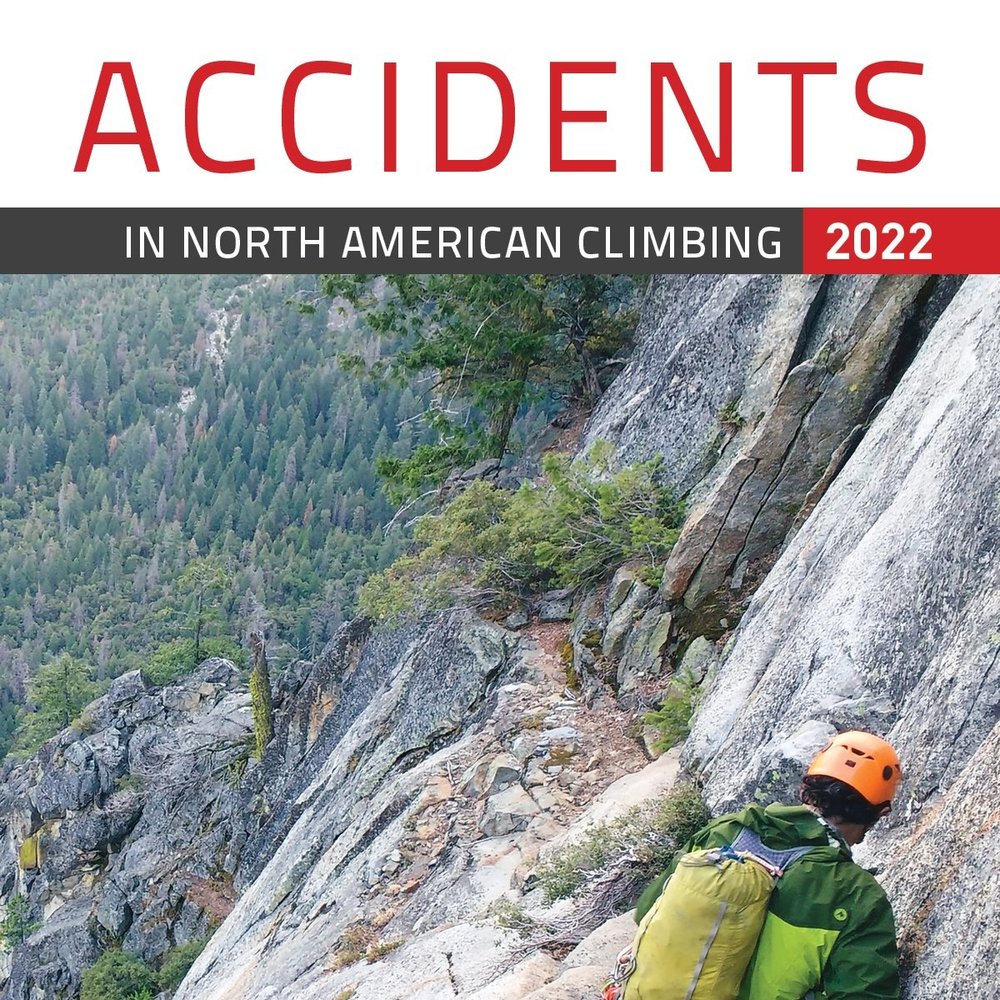
Accidents in North America Climbing and The Sharp End Podcast are two of our go-to resources to stay up to date on current accidents in climbing and the trends behind them. They are used as stories to help us, and others learn from our mistakes. On a recent Sharp End Episode (Ep. 71), the accident analyzed was told by two climbers whose home for climbing is Cochise Stronghold in Southern Arizona. Listen to Getting Rescued in Zion National Park (Ep. 71) to hear the full story. One of the key points that the climbing duo took away from their experience was the importance of having some sort of formal wilderness medical training, whether it be a Wilderness First Aid (WFA) or Wilderness First Responder course (WFR). This is not the only time it has been concluded that these kinds of trainings were crucial in analyzing an accident. Another take-away from this specific accident, as well as many others, is the importance of regularly practicing rescue skills with your partner(s).
Here at Granite Mountain Guides, we offer self-rescue courses to equip climbers in a single-pitch and multi-pitch setting with rescue skills to better equip climbers to be ready for an accident at any time. We highly encourage taking a WFA or WFR course as well. While we do not offer this training, Flagstaff Field Institute is an organization that is local to Arizona and offers these courses, on behalf of National Outdoor Leadership School (NOLS) Wilderness Medicine in Flagstaff & Prescott.

2| Formal Education
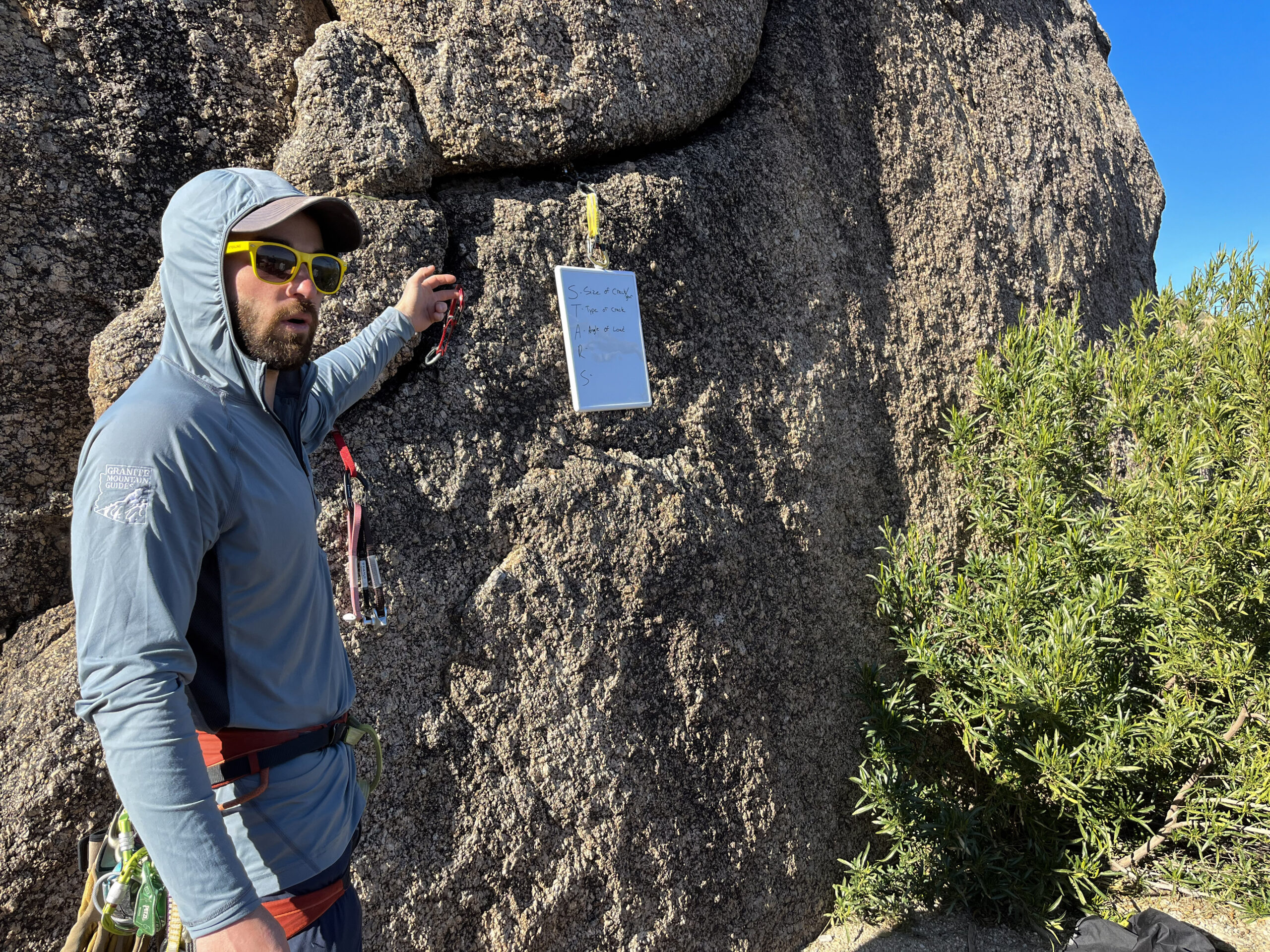
Formal Education is another key to keeping climbing safe and protected. We value formal education in a climbing setting more and more as climbing is growing in popularity. After learning a technical skill, it can be very dangerous when first putting it into practice. For example, learning how to clean an anchor can be one of the most dangerous parts of learning to climb outside if learning under improper instruction. The formal educational setting is important when we first learn a new skill, as it provides a more controlled environment with guides who are managing the risks. The professionalism of this learning environment also enhances one’s ability to take in new information and retain it for future use.
It is important to note that there is a difference between experienced mentors and professional guides/instructors, especially those that are certified by the American Mountain Guides Association (AMGA). Many times, experienced mentors have alternate, occasionally selfish motives. When working with a professional guide, you are ensuring that the person providing you new skills is up to date on best practices and presents the content in a safe, clear, and concise fashion. Professional guides work with your individual learning style and tailor your time together to suit your personal needs.
3| Intentional Mentorship
While we encourage formal instruction for learning new skills, we are still advocates for Intentional Mentorship. It is still equally important to have Intentional Mentorship in the climbing realm, and this dates back to the origin of climbing in the early 1900’s. Mentorship is how we can learn “everything else”. In an ideal case, someone will learn a new skill in a professional setting and then has an experienced mentor to supervise them until they reach a comfort in performing that task. This is similar to going to College and then having an Internship for further practice. In this fashion, it is often easy for mentors to be the ones teaching new material, which can often times lead to teaching these skills in a chaotic setting. Have you seen someone at the base of a crag yelling instructions up to another climber before? It isn’t a great scenario to witness!
As guides and instructors (and recreational climbers) it is a high priority to educate others, especially those new to the community on the importance of local climbing ethics, Leave No Trace Principles, and local climbing etiquette. These topics are very important, but can be difficult to cover in depth when the priority during a course set in an instructional setting, or a guided trip is risk mitigation/management and explicit instruction on technical skills. This is where Intentional Mentorship comes in, mentors have a unique opportunity to set an example and pass on these ethics, principles, and etiquettes in depth and in context to keep climbing safe and protected. We always encourage our guests to be mindful of mentors, identify where their personal biases may be, and make sure to always ask questions! This not only includes the time when they are out climbing on their own, but also with us in an Instructional Course or a Guided Trip.
In the next articles we are going to dive deeper into each of the three topics discussed above to provide resources on Wilderness Medicine Training, Formal Education, and Intentional Mentorship. It is important to us that we work together as a community to keep our Public Lands clean, and protect our ability to climb especially in a time where the number of climbers is drastically increasing. At Granite Mountain Guides we will continue doing our part, by educating climbers and outdoor enthusiasts alike about all aspects of the natural world. Join us!
As helpful as online resources can be, always remember to SEEK. QUALIFIED. INSTRUCTION
Neque turpis vitae eros praesent varius. Egestas pellentesque urna blandit, sed ac leo ut mi, nam wisi, laborum donec erat amet.
Nec ut tellus ornare, orci tortor suspendisse aliquet sollicitudin rhoncus, maecenas suscipit cras porttitor vestibulum vivamus.
Eu et tellus vestibulum taciti et sit, nunc enim ipsum donec aliquam vitae, per mauris, amet ultrices. Pellentesque amet proin ut vestibulum eleifend nam, wisi vel tellus pulvinar mi risus consectetuer, sed faucibus facilisi, accumsan nam.