Intentional Mentorship vs. Formal Education
There is a difference between formal instruction and intentional mentorship. We recently laid out the criteria of formal instruction in a separate blog and now we want to take some time to focus on what it looks like to have intentional mentorship in climbing and why it’s important.
Impacts of Climbing Gaining Popularity
Climbing is gaining popularity, the community is growing, and as a result our climbing areas are in danger. This is where mentorship in climbing comes in. Mentors have a unique opportunity to set an example and teach local climbing ethics, Leave No Trace Principles and good environmental ethics. The Access Fund is an organization dedicated to keep climbing accessible while preserving the land we love so much.
There has been more permitting process put in place than ever before to regulate the number of climbers that are impacting the land. The Climber’s Pact is a list of commitments for climbers to pledge themselves to keeping impacts low in our climbing areas to keep them safe and open. In general, the climbing community does not want a permit requirement to access our beloved areas, but we need to take ownership and be responsible stewards to prevent that from happening more. Following the Climber’s Pact is one simple way to set a good example in the community.


This photo was taken at a bouldering crag in Boulder, CO and posted by the Access Fund in an article titled “The Double-Edged Sword of Climbing’s NewFound Fame”
We often see mentorship and instruction confused in this industry. Many times, experienced mentors have alternate, selfish motives. When working with a professional guide, you are ensuring that the person providing you skills is up to date on best practices and presents the content in a clear and concise fashion. Mentorship looks more like coming alongside a climber (usually a new climber) and teaching them in a loose manner. This can include initial technical skills, but should focus more on the efficiencies, principles and ethics.
One of the factors that contributes most to this boom in climbing is the increase in the number of climbing gyms. In 2014 Mountain Project listed 884 climbing gyms in the U.S. and that number is now 1,165. For you data geeks, that’s an increase of nearly 25% in the last 6 years alone!

Mentorship Starts in the Gym

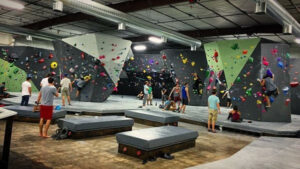

Outside Climbing posted an article in 2014 titled “the mentorship gap” and it does a great job of outlining what it looks like to have intentional mentorship in the climbing community. One of the key take-aways from this article is that mentorship starts in the gym. It is much easier for climbers who learned outside to adapt to a gym setting than it is the other way around. When gym climbers transition to an outdoor setting it is important that they not only learn the technical skills of placing quick draws on bolts, setting sport anchors, and cleaning routes. They need to be mentored in crag ethics and Leave No Trace principles if we want to keep our climbing areas accessible for future generations. We need to come to terms with the fact that climbing is no longer a subculture. Climbing is now, and has been for a while, mainstream and with this visibility comes responsibility.
GMG offers a Gym-to-Crag course which acts as a smooth transitional experience for climbers to learn the differences between a climbing gym setting versus climbing outside at the crag, and while we touch on LNT and crag ethics, we depend on the climbers who have been in the community a while to seek out and come along side these new climbers to teach and exemplify what it looks like to Leave no Trace, respect others, and stay safe.
This is a call to work collaboratively as a community. We need both formal education and intentional mentorship to protect climbing in this drastic growth we are seeing. The only constant in this world is change, and we need the community to rise up to this challenge!