
Have you ever been in an accident or suffered an injury while out climbing? Or have you ever witnessed an accident or injury at the crag or in the backcountry?
Those scenarios can be traumatizing and often elicit a lot of panic. That is why we are going to spend an entire blog post talking about the benefits and importance of obtaining wilderness medicine training whether it is the basics of wilderness first aid or more in-depth training, such as taking a wilderness first responder course.
What is a WFR? What is a WFA?
First, we wanted to start by defining what a Wilderness First Responder (WFR) is and highlight the difference between a WFR course and a Wilderness First Aid (WFA) course. A certified wilderness first responder is an individual who obtains a standard level of medical training for remote locations. Responders are trained in patient assessment, equipped with treatment tools to stabilize various conditions, and provide extended care in remote environments (Definition from DMM). A WFA covers some, but not all, of the same topics and not as in-depth. A WFA Course is often 2-3 days long (16 hours), whereas a WFR Course is 7-9 days long (80 hours).
Why take a WFR or WFA Course?
When you go out for a day of climbing, how often do you plan for your day? Whether it’s a day at a new crag or a bigger backcountry objective. Most of you probably (hopefully) have an idea of what routes you want to hop on or have read some beta on the approach. We call this trip prep. Preparing for a trip is an important facet of risk management whether you think about that in your planning or not. Taking a WFR or WFA course is a form of risk management. By doing so you are equipping yourself with the tools that are at the least nice to have and at most lifesaving.
We love The Sharp End Podcast. For those of you unfamiliar with the podcast, it is a resource that analyzes individual’s accidents in the mountains and concludes with take-aways to learn from. One of the common questions you’ll hear the host ask is if the individual’s involved in the accident have ever received any kind of wilderness medicine training. When the answer is no, more times than not, the response is that the victims wish they did.
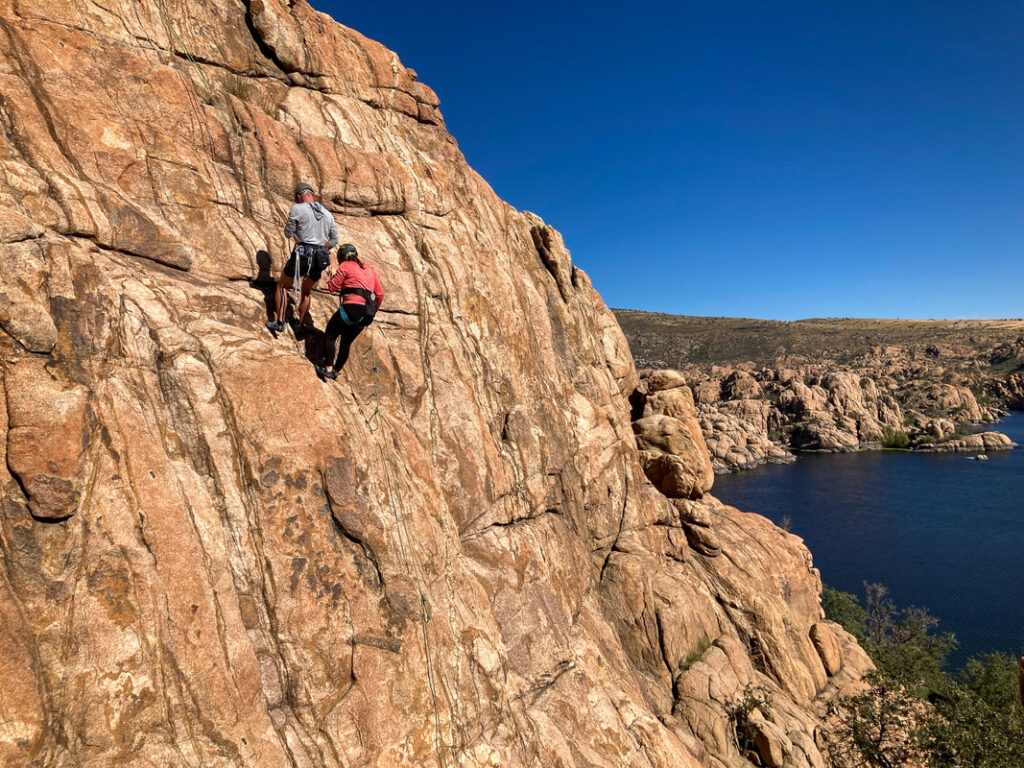
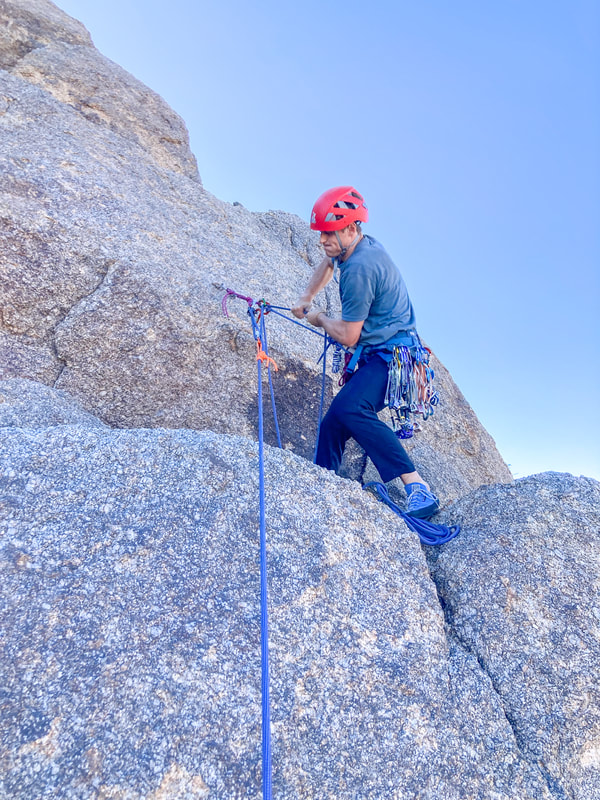
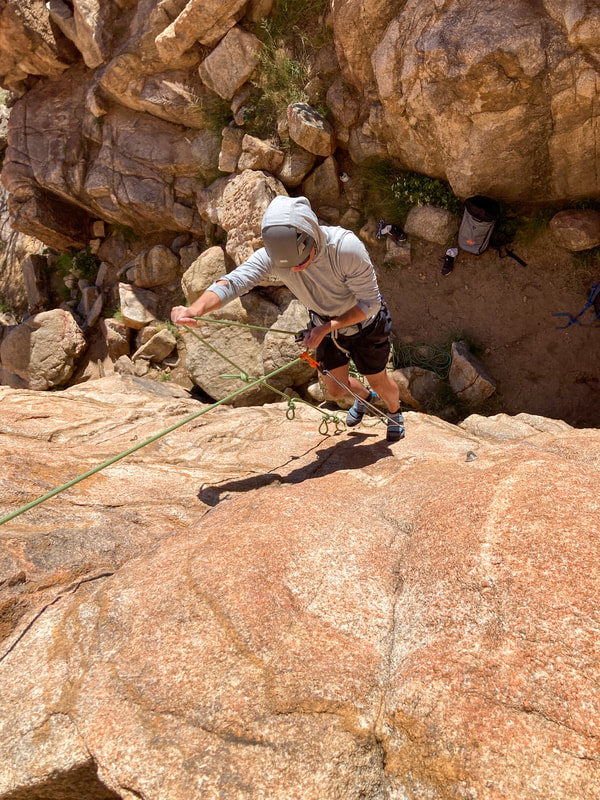
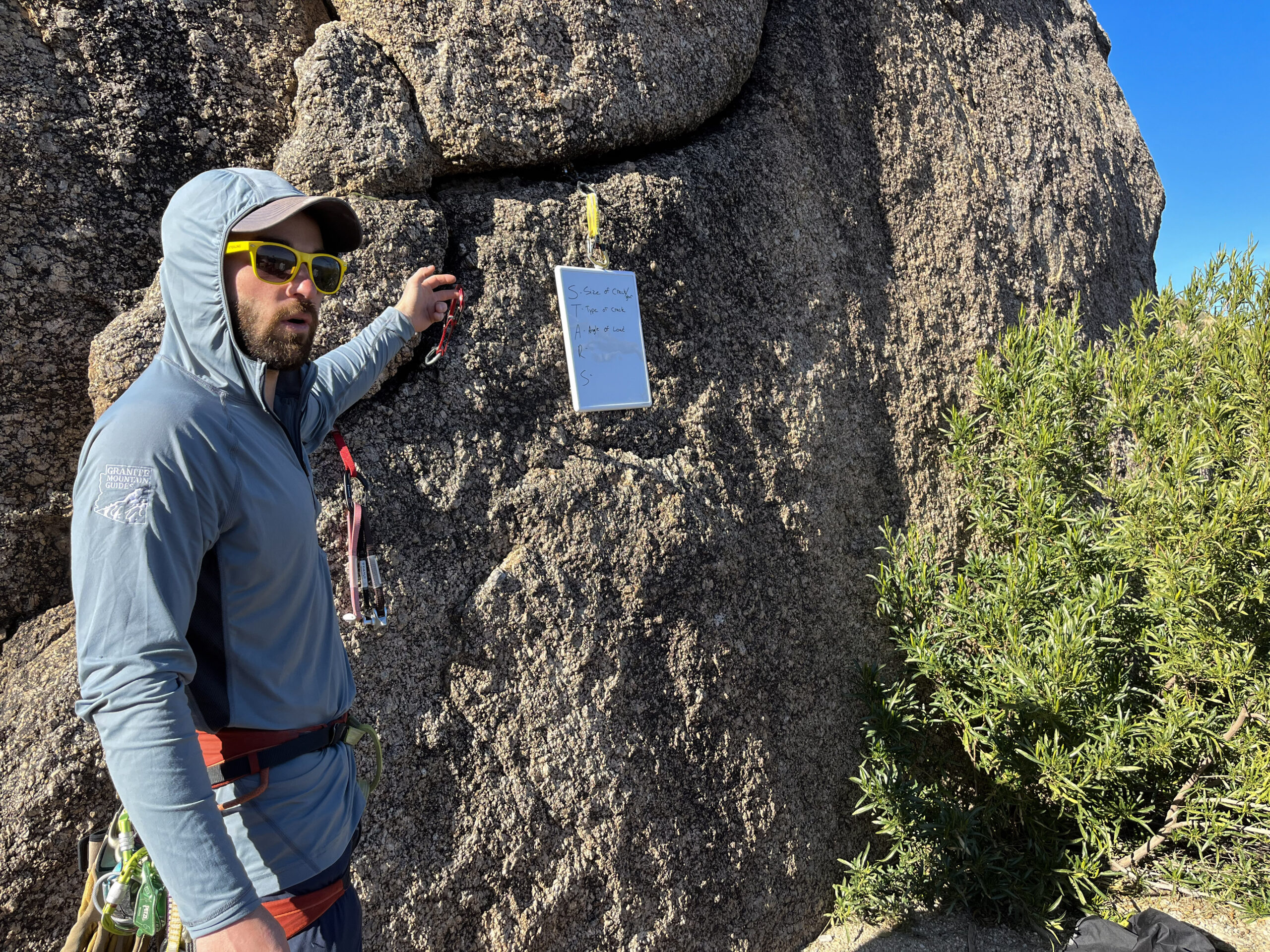
GMG offers Self-Rescue courses in a Single-Pitch terrain as well as Multi-Pitch. These courses cover the technical rescue systems, but do not cover medical training. We highly recommend taking a WFR or WFA course as well as a self-rescue course to be prepared as possible if an accident were to occur to you or another bystander in the area. While we do not offer WFR/WFA courses at GMG there are many places that do. One of our go-to recommendations in Arizona is the Flagstaff Field Institute. FFI offers a WFR course, WFA course (as well as hybrid versions of both), WFR recertifications, and a Wilderness Upgrade for Medical Professionals (WUMP).
The Flagstaff Field Institute will offer a 10% discount on a WFA course to graduates of a GMG self-rescue course as a way of supporting the promotion of self-rescue skills and wilderness medicine!
Taking a WFR or WFA course could save lives.
Additional Resource: Satellite Devices
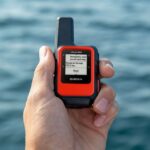
We are all about sharing resources here at GMG. We believe that keeping climbing safe and protected has a lot to do with working together as a community. Another resource we want to emphasize is a satellite device such as a Spot or inReach. These devices are satellite communicators that work even when there is no cell service. These devices are hopefully just extra ounces in your pack, but if an accident occurs they can help you contact assistance to save yourself, or a person in need.

Eu et tellus vestibulum taciti et sit, nunc enim ipsum donec aliquam vitae, per mauris, amet ultrices. Pellentesque amet proin ut vestibulum eleifend nam, wisi vel tellus pulvinar mi risus consectetuer, sed faucibus facilisi, accumsan nam.
Neque turpis vitae eros praesent varius. Egestas pellentesque urna blandit, sed ac leo ut mi, nam wisi, laborum donec erat amet.
Nec ut tellus ornare, orci tortor suspendisse aliquet sollicitudin rhoncus, maecenas suscipit cras porttitor vestibulum vivamus.